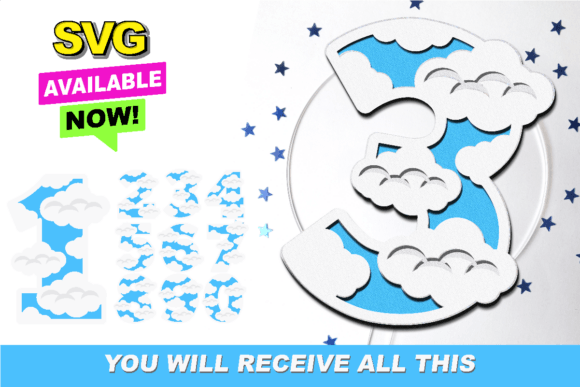
Clouds Numbers 3D SVG Review for Real Embroidery Projects
Real-Life Use Scenarios
One project I immediately thought of was a sweatshirt embroidery for a child’s birthday gift. The clouds add a sense of playfulness while maintaining a clean look. When applied to a cotton sweatshirt, the 3D effect becomes more pronounced, creating a subtle raised appearance that feels both premium and unique.
I also tested the design on a tote bag design, using satin stitch along the outer edges and fill stitch inside the numbers. The result was charming — the clouds looked like they were floating across the fabric. For an Etsy seller or handmade shop owner, this could easily become a signature element in personalized products like name tags or age indicators for kids' backpacks.
In commercial embroidery, these numerals could work well for small batch production, such as branded aprons for a bakery or café. The consistent shape and style across all numbers help maintain brand recognition and visual harmony. They’re also great for embroidered patches used in retail or promotional items, offering a professional finish that still feels approachable and warm.
Best Fits
- Baby embroidery (onesies, blankets, hoodies)
- Holiday gifts (personalized stockings, ornament labels)
- Custom apparel (t-shirts, sweatshirts, hats)
- Nursery decor (numbered wall art, embroidered pillows)
- Tote bag design (name or age embroidery for gifts)
- Small shop product branding (merchandise like aprons or tea towels)
Where to Use Carefully
While the Clouds Numbers 3D SVG is versatile, there are some limitations to consider. If you're working with small hoop sizes, especially under 4 inches, the design can become cramped. The 3D aspect relies on some space between stitches, so tight areas might compromise the final look. On textured fabrics or thin materials, the raised elements may not hold up as well. I noticed that stitching on flannel resulted in a slightly bumpy finish, which wasn't ideal for a smooth presentation. Stretchy knits can also distort the shape if not stabilized correctly. For dark fabric backgrounds, thread color contrast is crucial. Without sufficient visibility, the design loses its charm. If you're planning to use these on curved surfaces like caps or hats, be prepared to adjust the layout or scale down significantly. The corners of the numerals, while generally clean, require attention when resizing — overly tiny versions can lose their character and clarity.Potential Challenges
- Use caution with tiny lettering or small-scale applications
- Test on layered garments or thick materials for stitch performance
- Avoid using on products that need frequent washing, unless you reinforce the stabilizer and backtack thoroughly
- Review stitch density before mass production to ensure durability
Impact on Product Value and Customer Perception
These numerals have a strong presence in terms of visual appeal. They bring a sense of craftsmanship and care to any handmade product, making customers feel like they're receiving something special rather than generic. In my experience, this kind of detail often increases perceived value and buyer engagement, especially for Etsy sellers and craft fair artisans who want their items to stand out. For personalized gifts, the Clouds Numbers 3D SVG elevate the project beyond basic monogramming. They offer a fresh take on numbering — think “5” on a onesie instead of plain block letters. This can help with customer trust, showing that the creator understands aesthetics and quality. In commercial embroidery, having a cohesive numerical style is key for brand consistency. These digits can be used in logos, pricing tags, or even in store signage mockups. Their softness makes them adaptable to both feminine and masculine themes depending on the surrounding design and color choices.Designer Notes for Practical Application
- Test the design on scrap fabric to evaluate how the 3D effects translate after stitching.
- Check thread color contrast against the chosen fabric background. Light colors on dark fabrics will pop better than vice versa.
- Review stitch density settings — higher density can enhance the 3D look but may affect fabric integrity or increase stitch count.
- Confirm hoop size requirements for your specific machine. While the file is trimmed well, actual stitch behavior may vary.
- Inspect small details like cloud textures and corners to ensure they remain crisp after scaling.
- Create black and white mockups to test visibility and clarity before committing to a color scheme.
- Compare the design on both light and dark fabric backgrounds to understand how it adapts to different styles.
- Use proper stabilizer for best results, particularly on stretchy or delicate materials.
- If you plan to sell finished products or digital assets, always check the licensing information provided by the vendor.